


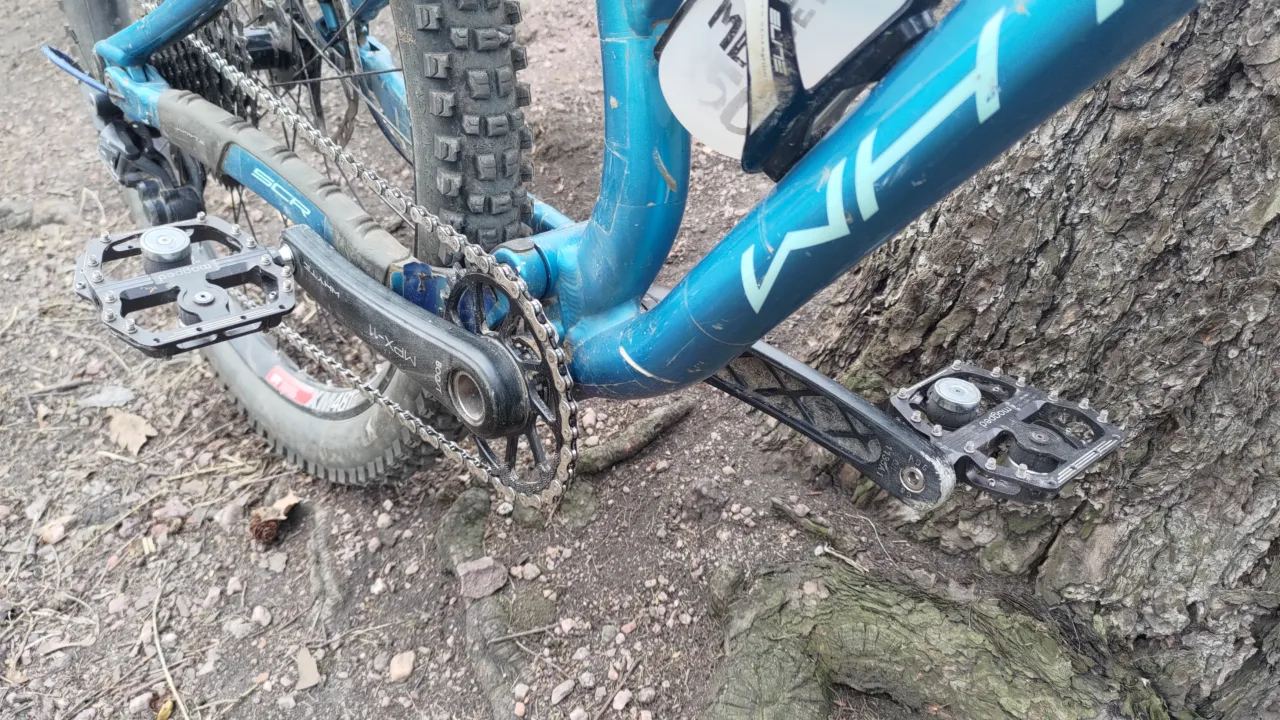
Magnetic pedals are designed as a compromise between flat pedals and clipless (SPD) pedals. They are supposed to keep your feet secure on descents while still allowing easy release. It sounded exactly like what I needed.
This article answers the following questions:
- Magnetic pedals vs flat pedals?
- Magnetic pedals vs clipless (SPD) pedals?
- Are magnetic pedals any good?
- Are magnetic pedals safe?
- Magped pedals – reviews and tests?
Why not flat pedals?
What bothers me about flat pedals is that my foot bounces on them. Especially the back foot on very rooty or rocky trails, or on the washboards in bike parks. Many times my foot has come off the pedal, shifted to a different position, and I had to ride with my foot in the wrong spot until I found a good moment to correct it.
Why not SPD pedals?
So why not buy clipless (SPD) pedals? Because I don’t want to be so firmly attached to the pedals. I know that DH racers ride clipped in, but I’m not a DH racer :) On difficult trails that I don’t know, I often stop suddenly to look and think about how to ride a section or whether I even want to ride it at all. I have SPD pedals on my cross bike and I know that even if you set the release tension to the weakest, you still need to make a proper heel-out movement to unclip, which means it takes a bit longer to get your foot on the ground.
I also have friends who ride clipless pedals and I’ve seen the problems they have when they need to start moving after stopping in a difficult spot. They need a moment to clip back in, but in a steep, technical place there is no time for that. You need to put your feet on the pedals and go.
The third issue is safety in crashes. I don’t want to crash while being attached to the bike. In theory the pedals should release, but in practice, if the crash happens at low speed or if I go straight over the handlebars, they might not release in time.
Magnetic pedals – the solution?
Magnetic pedals seemed like the perfect solution to me. I imagined they would work like flat pedals, but with a magnet that would keep my foot better planted on descents.
Types of magnetic pedals
There is only one company making magnetic pedals – Magped. Their range includes several types of magnetic pedals, not only for MTB but also for gravel and road bikes. Since I ride enduro, I chose the Enduro2 model.
The Magped Enduro2 pedals come in two versions: with 150 N magnets for riders up to 80 kg and 200 N magnets for riders over 75 kg. I weigh 45 kg, so the choice was obvious. I was even a bit worried they might be too strong. Another model – the Sport2 – is also available with 100 N magnets for riders up to 65 kg, so I thought that level of power should be suitable for me.
Shoes for magnetic pedals
The first problem with Magped pedals appeared when choosing shoes. I have a very small shoe size (35-36), which already limited my options. But that wasn’t the only issue. In theory, all MTB shoes designed for SPD pedals should work with Magped pedals. In practice, however, they don’t – because in clipless pedals the cleat is mounted in the middle of the pedal, while in the Magped Enduro2 the magnet is located at the back of the pedal.
These are Giro Chamber II shoes. This is one of the models listed on Magped’s official website as compatible with the Enduro2 pedals.
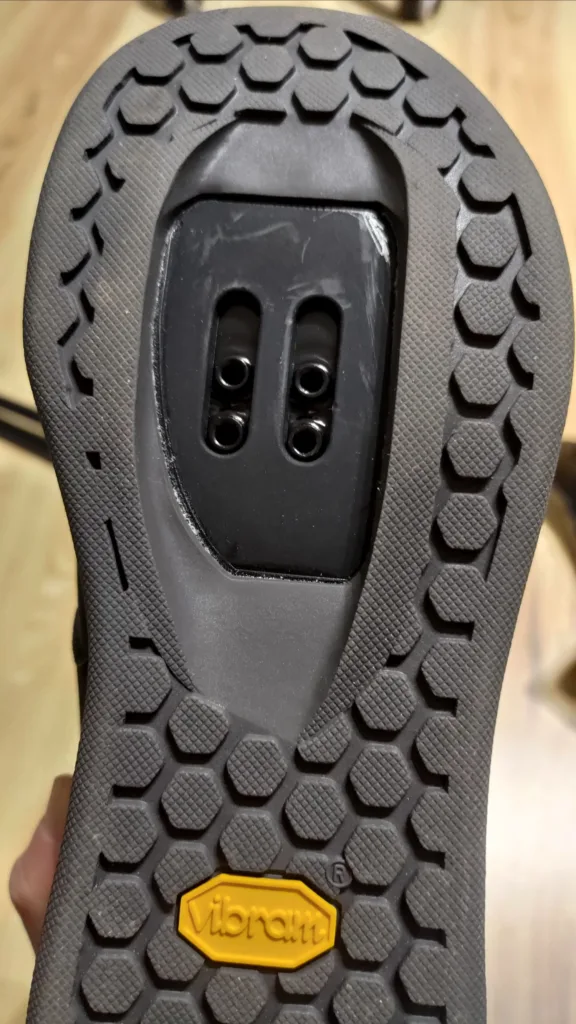
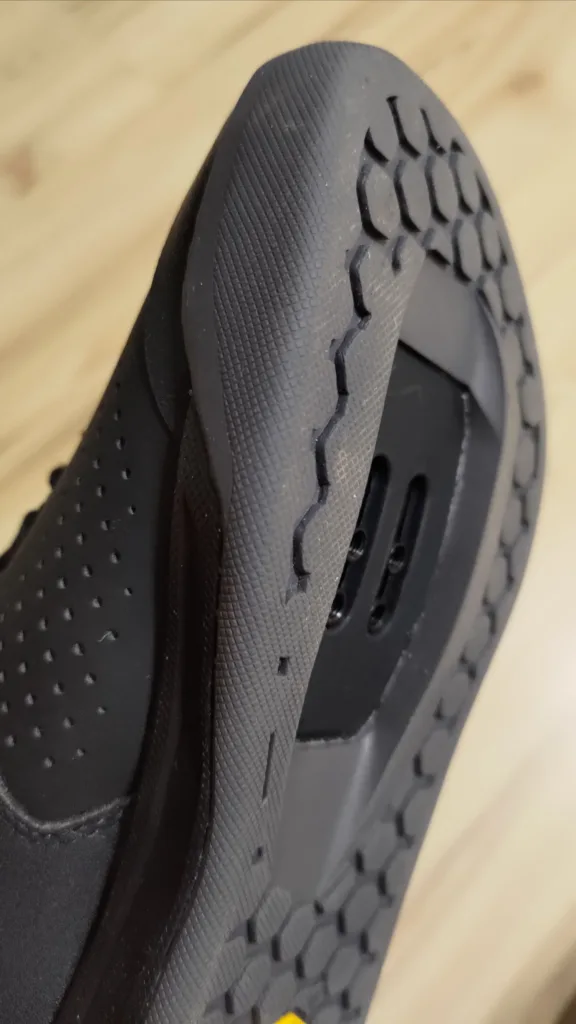
They are not compatible, because the cleat mounting position is so far forward that with Magped pedals I would be pressing on the pedal with my toes.
I bought Shimano SH-GE500 MTB shoes, but they are also not ideal because the toe area is raised.
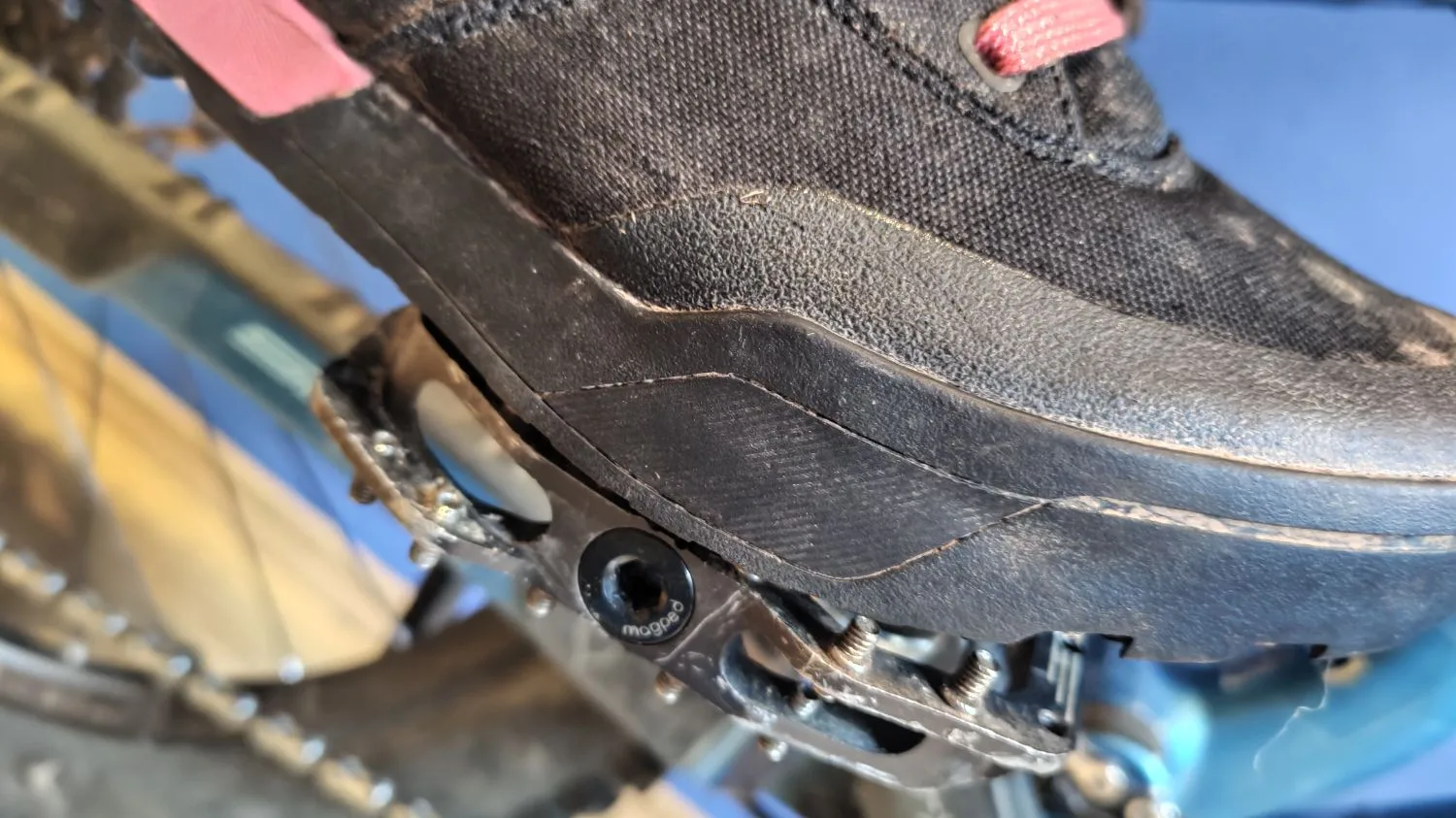
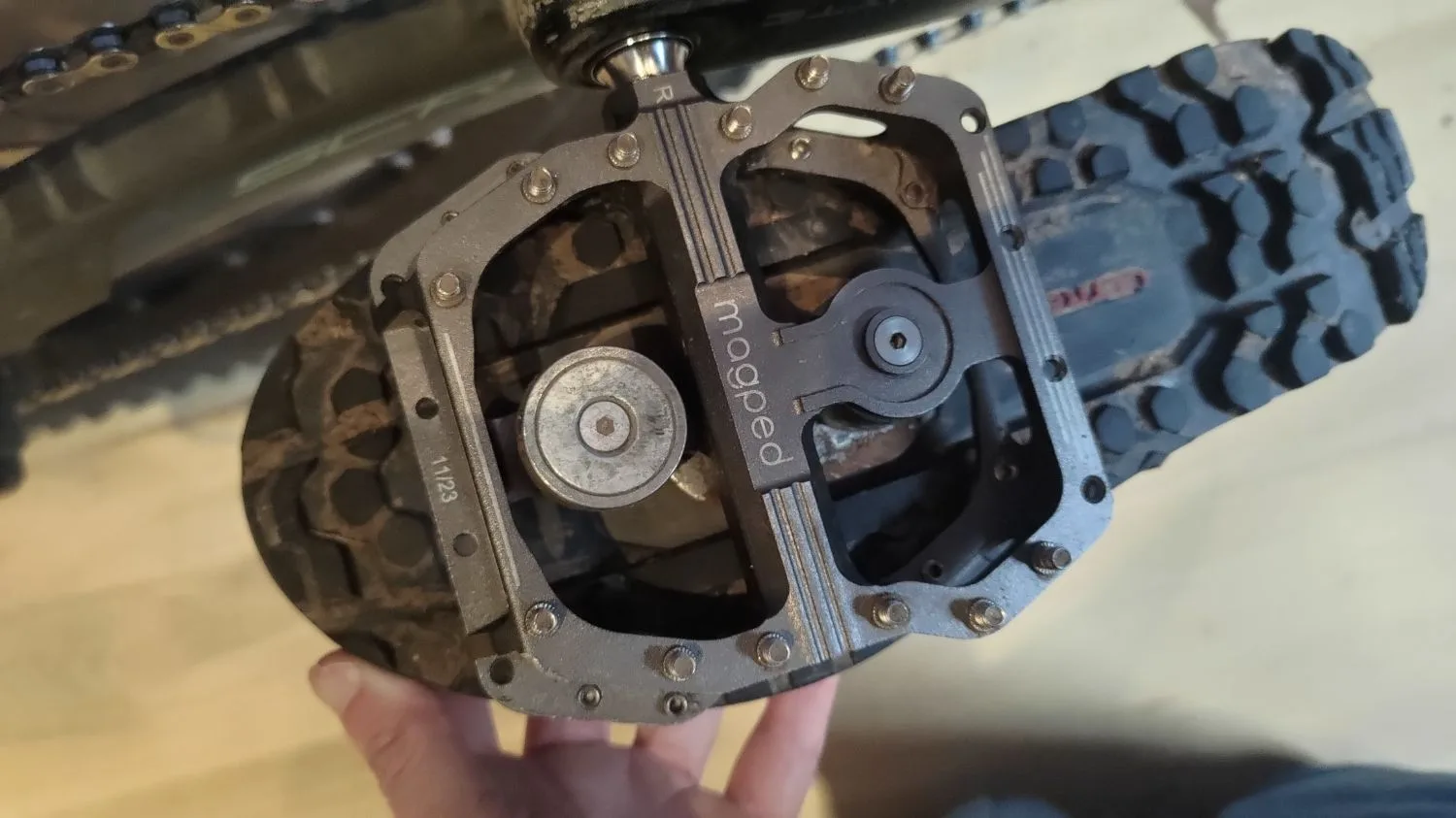
Magped pedals come with pins that you screw in yourself as you like. There are fewer pins than holes, and they come in two lengths. This is how I installed them.
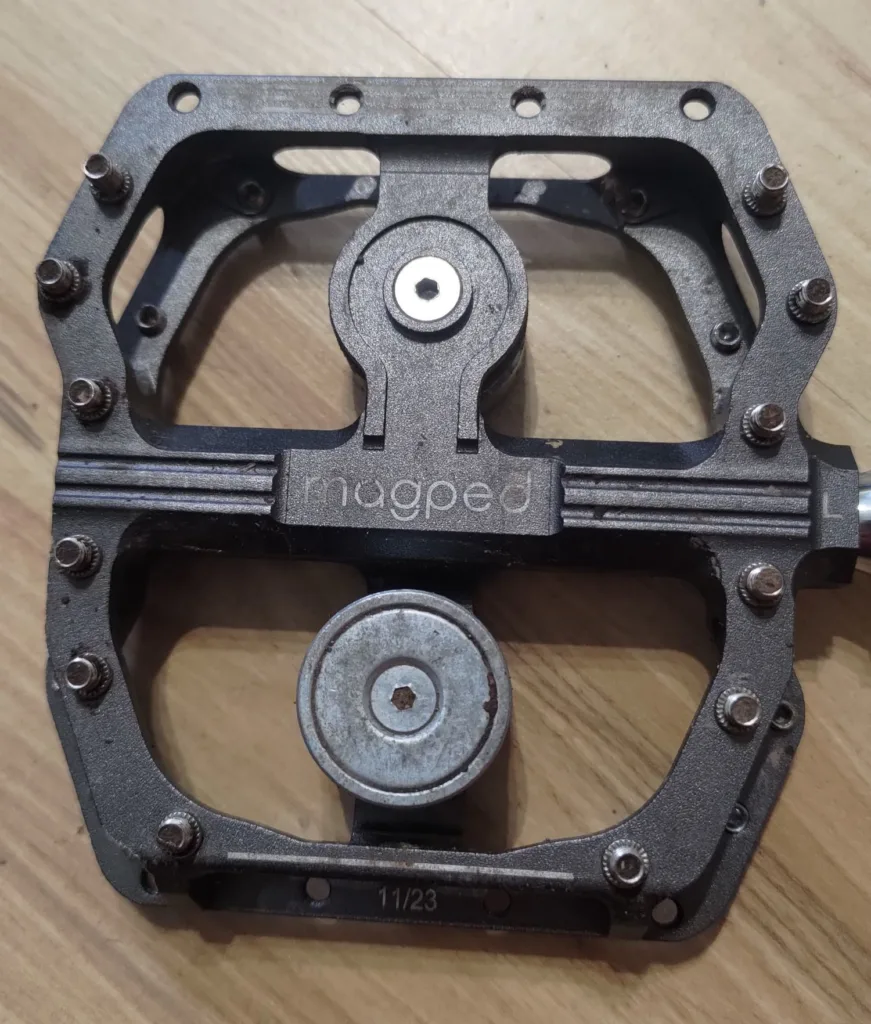
I didn’t use pins at the front of the pedal because the shoe didn’t touch there anyway. Additionally, I had to be careful to position my foot so that the magnet would attach to the rear part of the cleat plate. If I missed and it attached to the middle of the plate, I was pressing on the pedal with my toes.
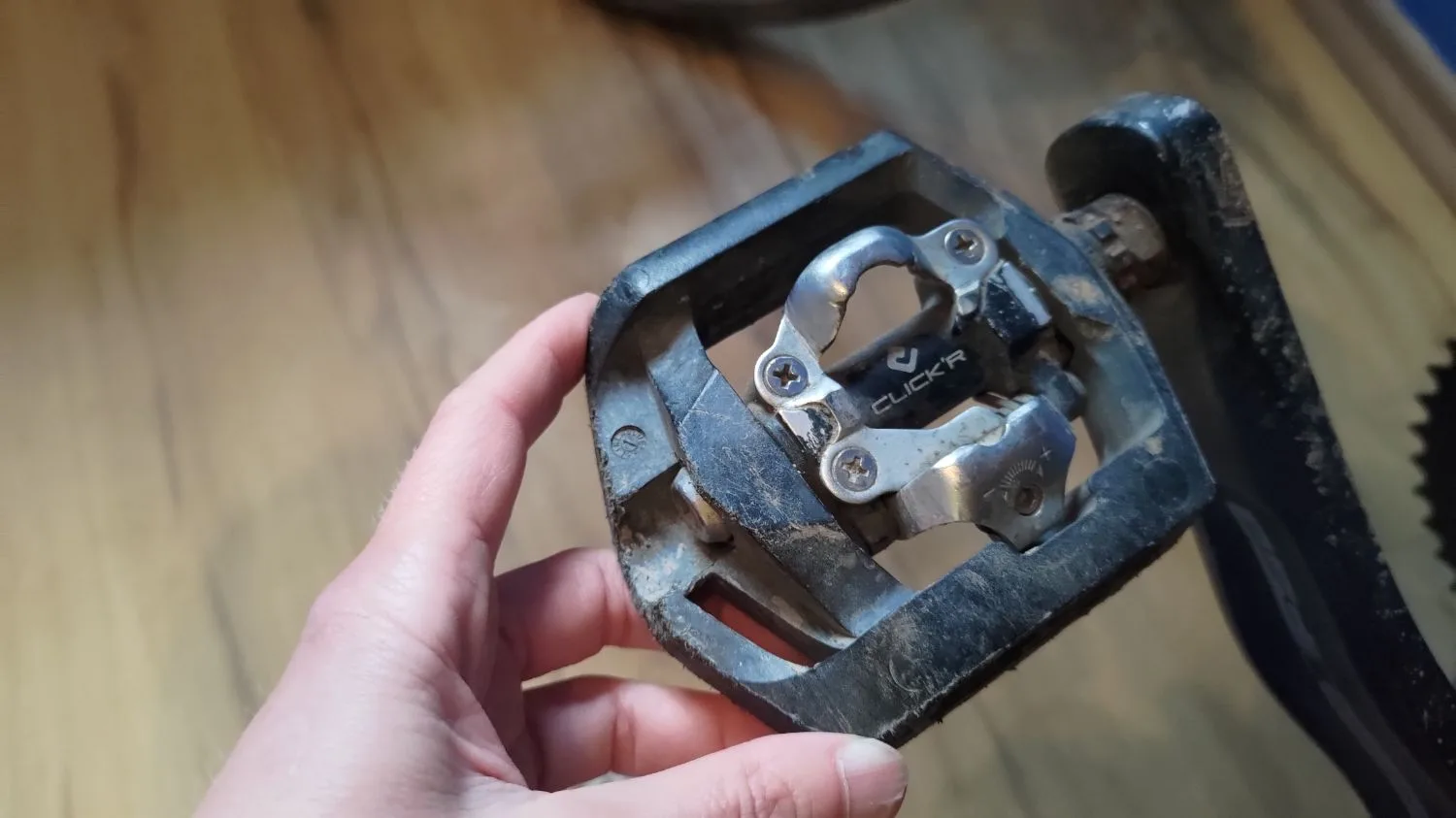
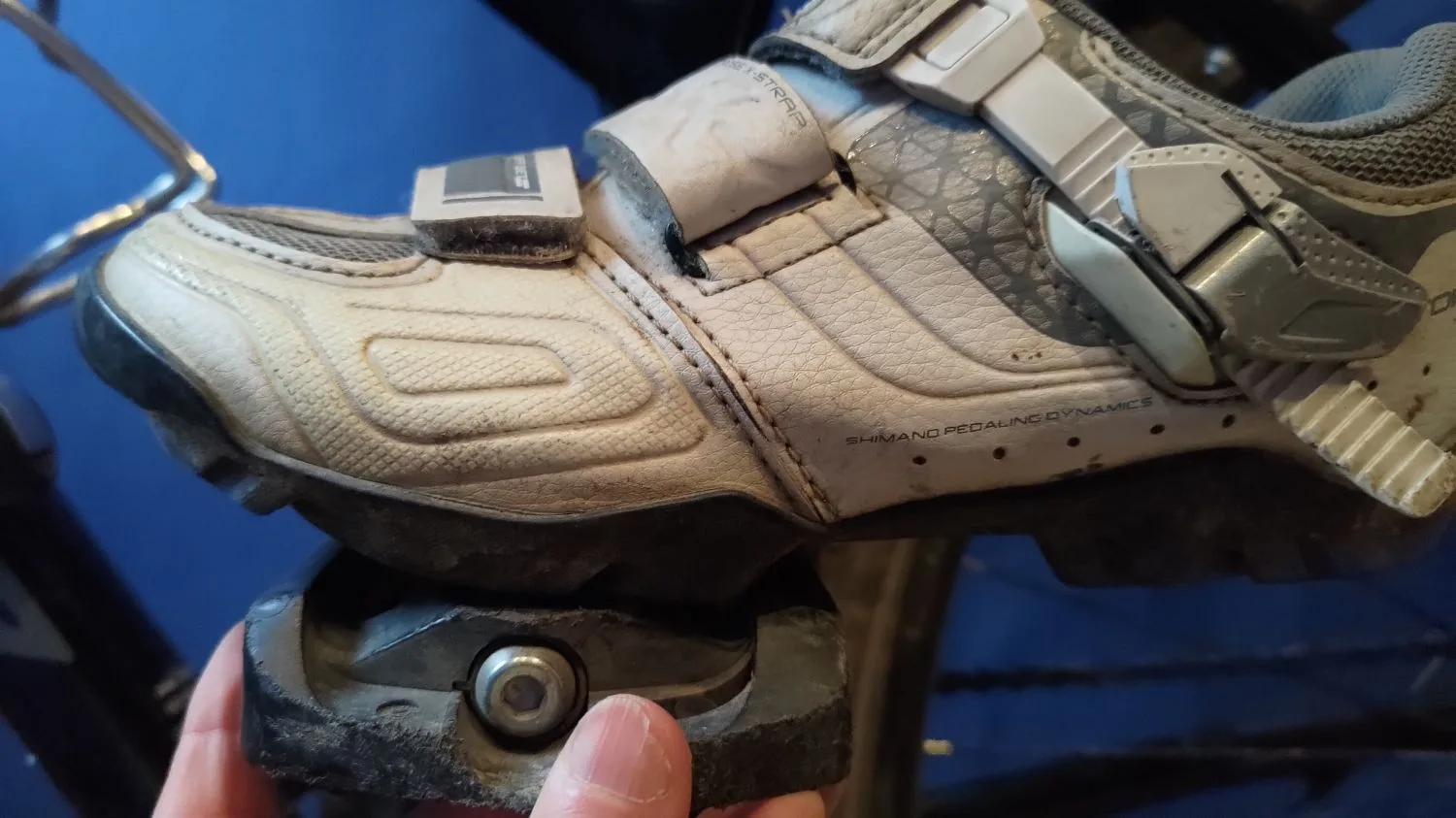
For comparison, this is how it looks with SPD. The cleat is in the middle of the pedal, so when clipped in, the part of the foot that should be pressing down (the ball of the foot) is exactly in the centre – not the toes.
How does it feel to ride with Magped magnetic pedals?
One advantage is that climbing is easier than with flat pedals. Just like with clipless pedals, you can use the upward pull of your leg, which noticeably helps on climbs.
On descents it’s also better than flat pedals, but only under certain conditions.
First, only if I managed to position my foot perfectly on the magnet. As I mentioned, if I was slightly off in the front-back direction, my foot ended up too far back. If I missed slightly left or right, because the pedals are wide and my feet are narrow, the side pins were outside the shoe. And once the magnet attaches, you can’t adjust your foot without completely lifting it off the pedal.
Positioning your foot can be practiced. The second condition is more problematic: Magped magnetic pedals only work well when it’s dry. If the pedals or shoes were muddy, they would release unexpectedly. And when the magnet didn’t hold, it was actually harder to keep my feet on the pedals than with flat pedals. Why? Shoes designed for clipless pedals are made to be used while clipped in. The raised toe, stiff sole, and apparently inferior rubber compared to my Ride Concepts shoes made me feel unstable when the magnet released. I’m not even talking about very muddy conditions – this level of dirt was enough for the magnet to release while riding stairs.
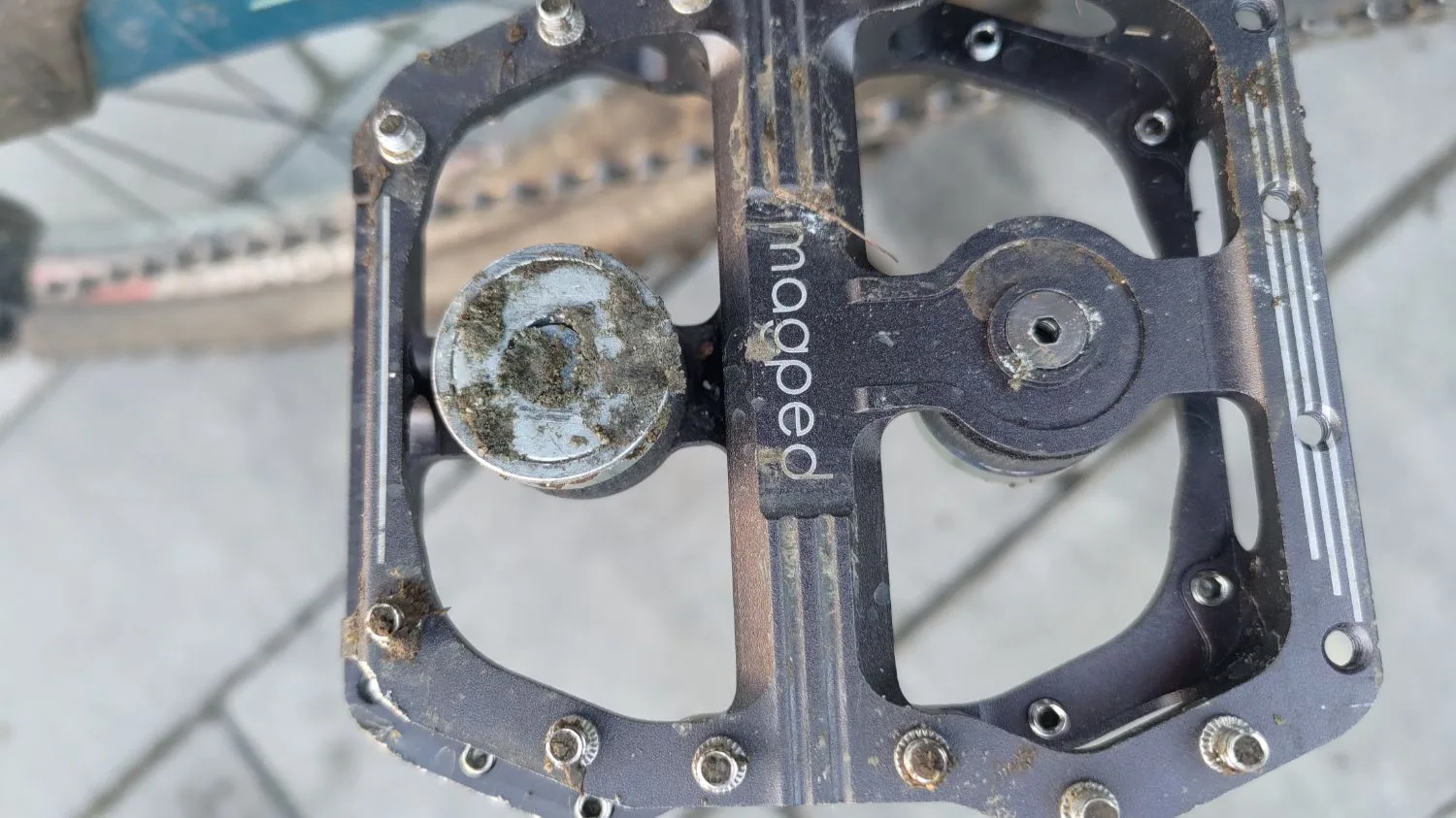
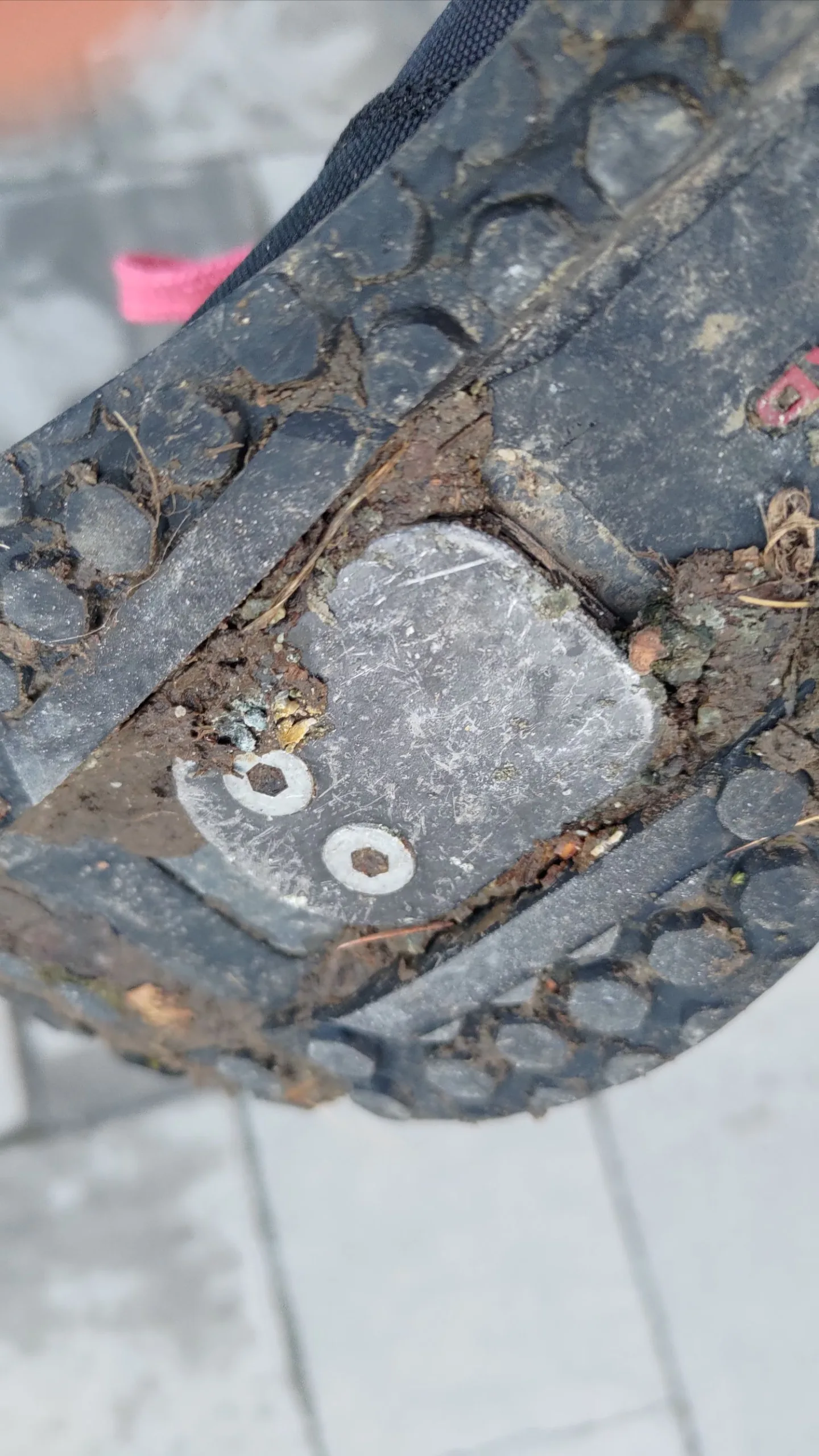
What about intentional release when needed? It’s easier than with SPD. The movement required is different – with SPD you twist your heel outward, while with Magped it’s easiest to release by moving your knee outward. I learned this quickly and had no problem getting my foot off the pedal when I needed to dab. I also had one crash and the shoes released as they should. However, I have doubts whether they would release in an OTB (over-the-bars) situation, especially at low speed.
Durability of Magped magnetic pedals
I didn’t ride with the Magpeds for very long, but they have already rusted. I left muddy shoes in the closet for a few weeks and this is what they look like now.
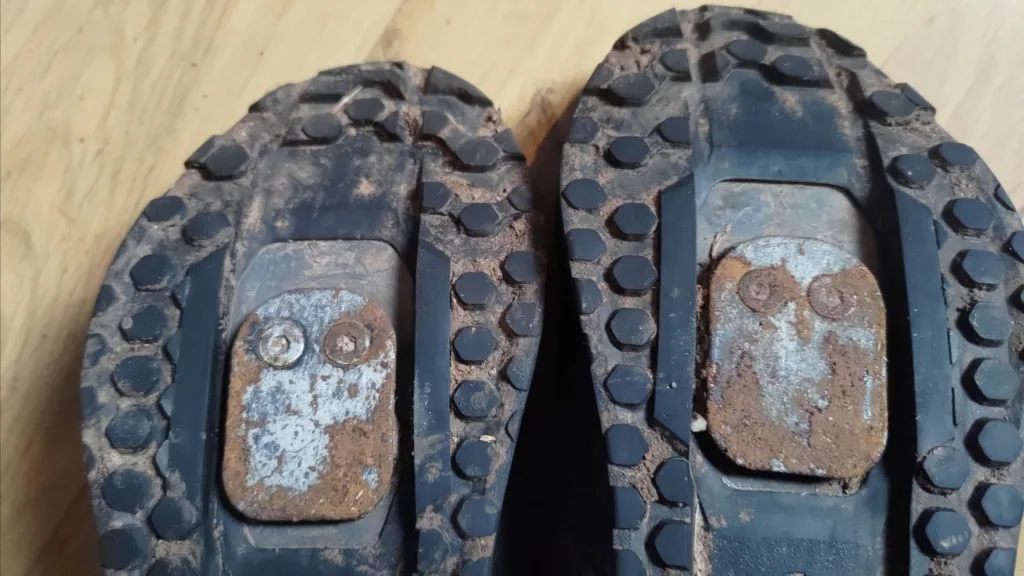
I’ve had my SPD pedals for several years. I’ve left muddy shoes in the closet many times and nothing has rusted yet.
Are Magped magnetic pedals worth buying? Pros and cons
Advantages of Magped:
- When I positioned my foot perfectly and it was dry, I felt more confident on descents than with flat pedals.
- Climbing was easier than with flat pedals.
- It’s easier to take your foot off the pedal than with clipless pedals.
Disadvantages of Magped
- In anything less than perfectly dry conditions, I felt less confident on descents than with flat pedals.
- It’s difficult to consistently position your feet correctly on the magnets.
You decide for yourself. In my case the disadvantages outweighed the advantages, and after a few rides I went back to flat pedals. If anyone is interested, I can sell the Magpeds at a good price ;) Otherwise, I’ll keep them – maybe I’ll use them occasionally on dry days.

 Thank you :)



Leave a Reply