


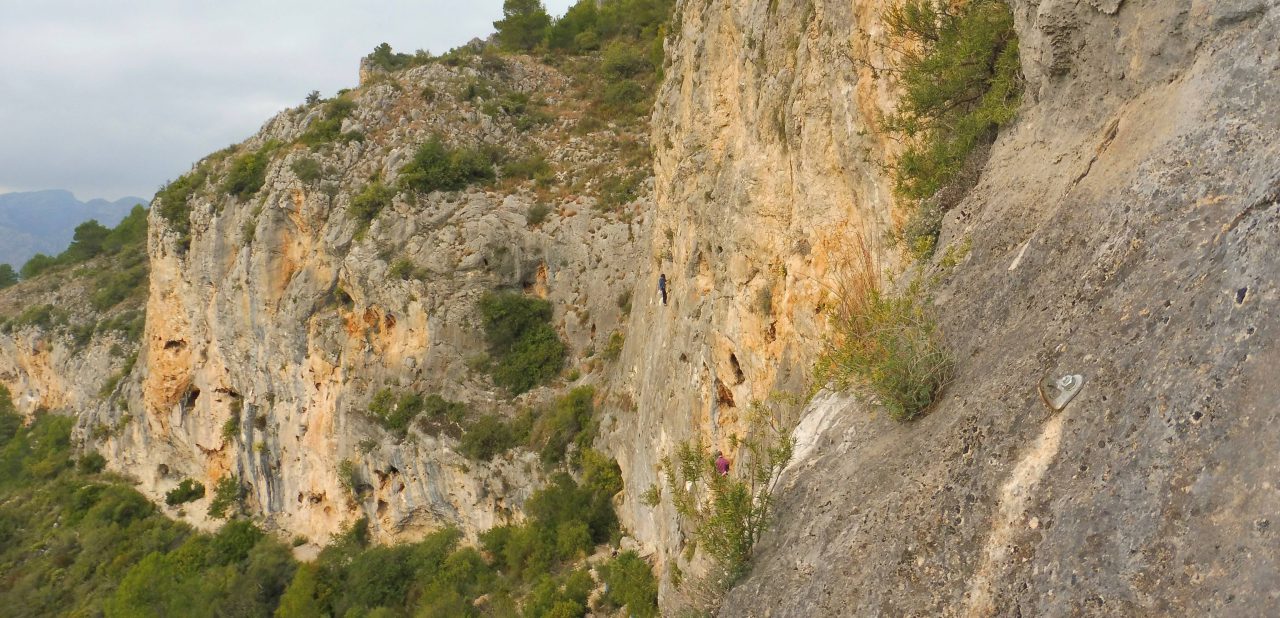
I visited Costa Blanca twice. In 2022, when we mainly climbed in the northern part of the region, and in 2026, when we explored primarily the south. The region is huge, and the sectors I visited allowed climbing mainly in the range of 5a – 6c.
My first stay on Costa Blanca lasted 1.5 weeks, and during that time we visited several climbing areas – Gandia, Bellus, Sella, Guadalest, Cabeçó d’Or, Sierra de Toix and Peñón de Ifach. The last two offer multi-pitch climbing, which I wrote about in this article: Climbing on Costa Blanca in Spain – Multi-pitch Routes.
The second stay also lasted 1.5 weeks; we were staying in Torrevieja and climbed in Redován near Orihuela and in Alcoy.
Both trips took place in winter, so we usually chose sun-exposed sectors.
Jump to section:
- Gandia
- Bellus
- Guadalest
- Cabeçó d’Or (Alicante)
- Sella
- Barranquet del Ferri (Alcoy)
- Redován (Orihuela)
Climbing in Gandia
Gandia is a small city by the sea, 70 km from Valencia and 110 km from Alicante. This is where we stayed for the first week before moving to Benidorm.
Marxuquera
Marxuquera is a rock located just 5 km from the center of Gandia, on which you will find almost 200 routes of a wide range of difficulties. It’s the best place around Gandia for climbers on level four-five, but climbers doing sixes or sevens will also find plenty of routes for themselves.

The rock is surrounded by orange orchards, and in the distance you can see the mountains and the sea. The atmosphere is only spoiled by the noise of cars from the nearby highway. And for half of the first day, also the sound of a chainsaw coming from the orchard …
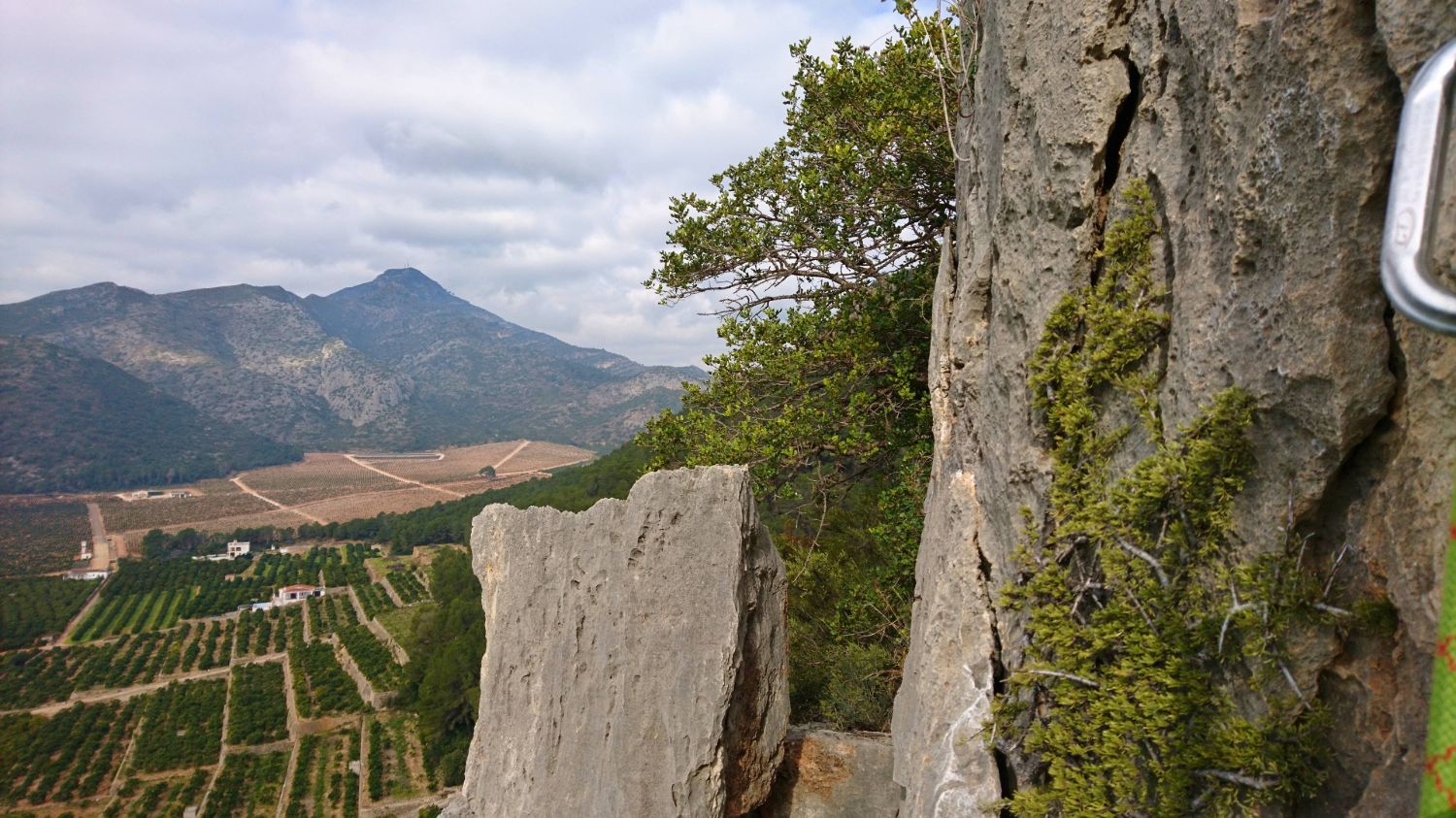

Most of the routes are 15-25 m high. There are vertical walls, dihedrals, overhangs, and caves with short seven rated routes.

There is also an interesting five (Patxi Saez) that goes through a hole inside the rock.


You can also meet animals on the rock ;)

Bovedin
Bovedón, Bovedin and Bovedós are adjacent sectors, also very close to Gandia.
Bovedón and Bovedós are sure to be fun for those who climb on the seven or eight level. We spent one day in Bovedin, which offers a lot of climbing in the sixth range.


There are a few short fives to warm up, but with a very sharp, unpleasant rock.
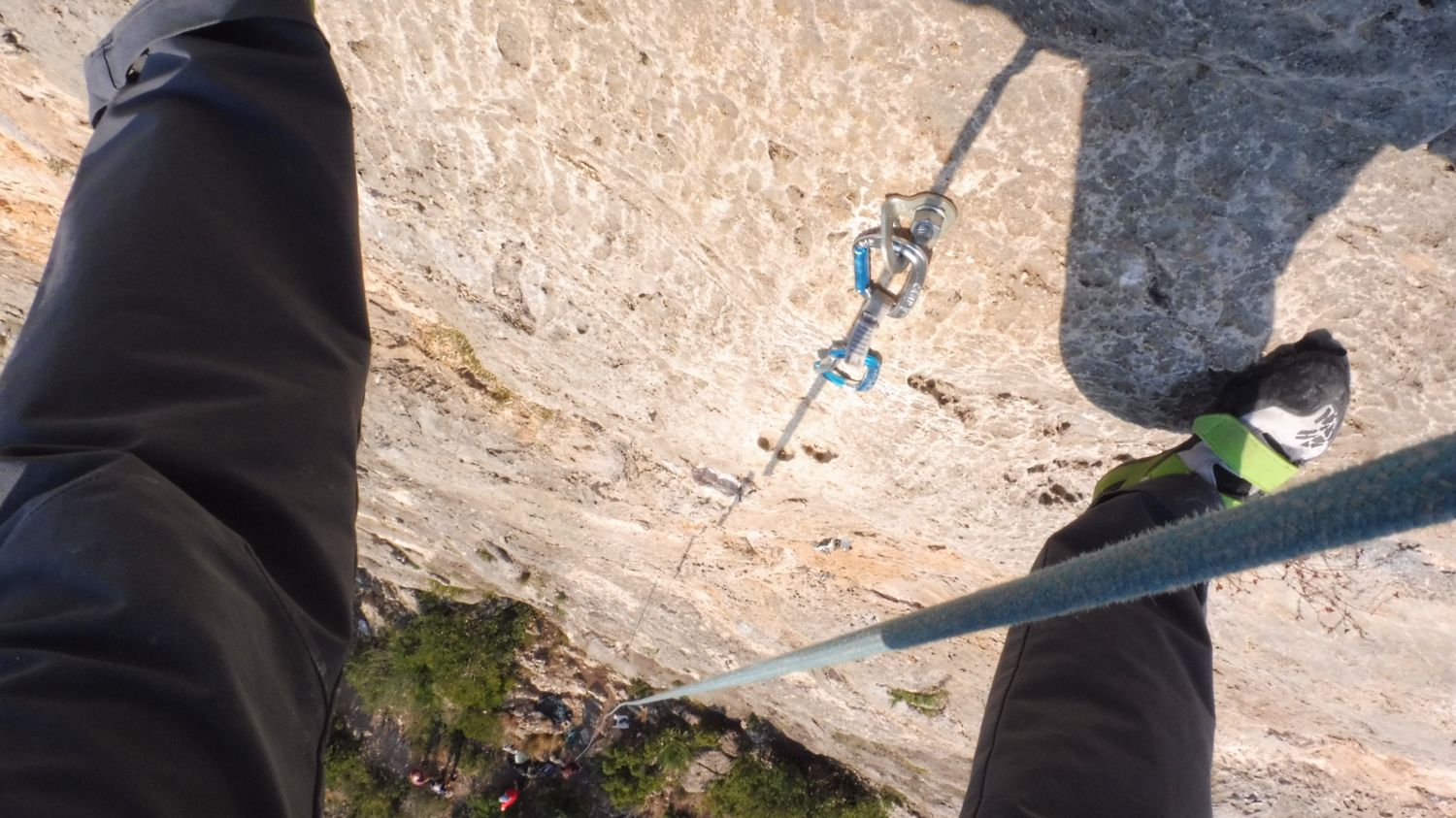
I like long climbing routes, so I really like the 28-meter Cosme (6b). I made it top rope because I did not think that on the second day I would lead the 6b, being a bit tired at the end of the day. However, I did so well that I think that I could do it on sight. Very pleasant climbing on jugs.

Climbing in Bellus
Bellus is half an hour’s drive from Gandia. The Costa Blanca Climbs guidebook by Roberto Lopez does not mention this area, but you can find topos on valenciaclimb.com.
Cova Petxina
The sector is located in a very nice area along the river.
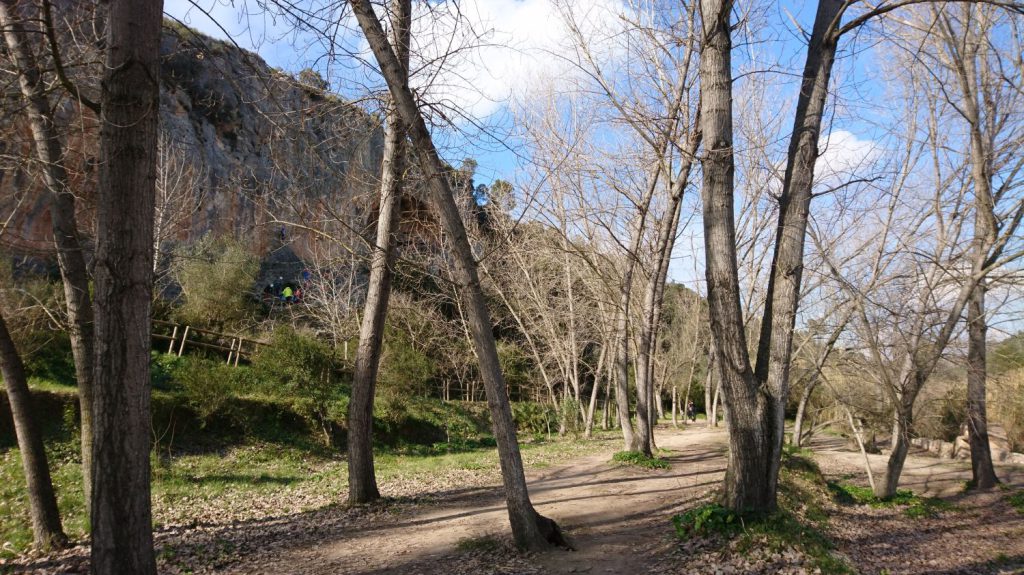
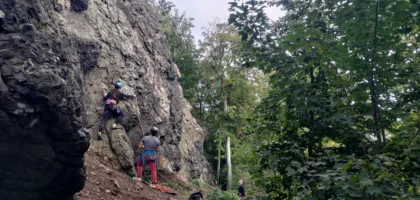
The rock is about 20 m high and there are several fours and fives on it, and over 30 routes ranging from 6a+ to 8b. Warming up on the slippery easiest routes, I reminded Polish Jura that I had not visited for a long time. In addition, we were there during the weekend, so at the crag there were the whole families and even a drone buzzing overhead. You could really feel like on a Polish summer weekend ;) More difficult routes are less slippery and there is calmer by the rock, but the nature of climbing also reminded me of the Jura.


Altet
Here I didn’t feel like in Poland anymore, but like in Spain :) There are about 100 routes in the sector, mainly sixes and sevens, but there are two fours and two fives for warming up. Routes’ height is more or less like Cova Petxina, but with normal friction.
This is where I sent my first 6b OS (San Casporro de Asís). And I didn’t even get tired. It felt like 6a. My friends were doing 6c next to my route and were also surprised that it has such a high rate. I regret that the rain chased us away, because I was also going to try ;)


Climbing in Guadalest
Guadalest is a small town half an hour from Benidorm. Already browsing the topo, I knew that I would like it there. Lots of routes in the range 6a – 6b and many of them about 30 m high. Moreover, interesting rock formations.


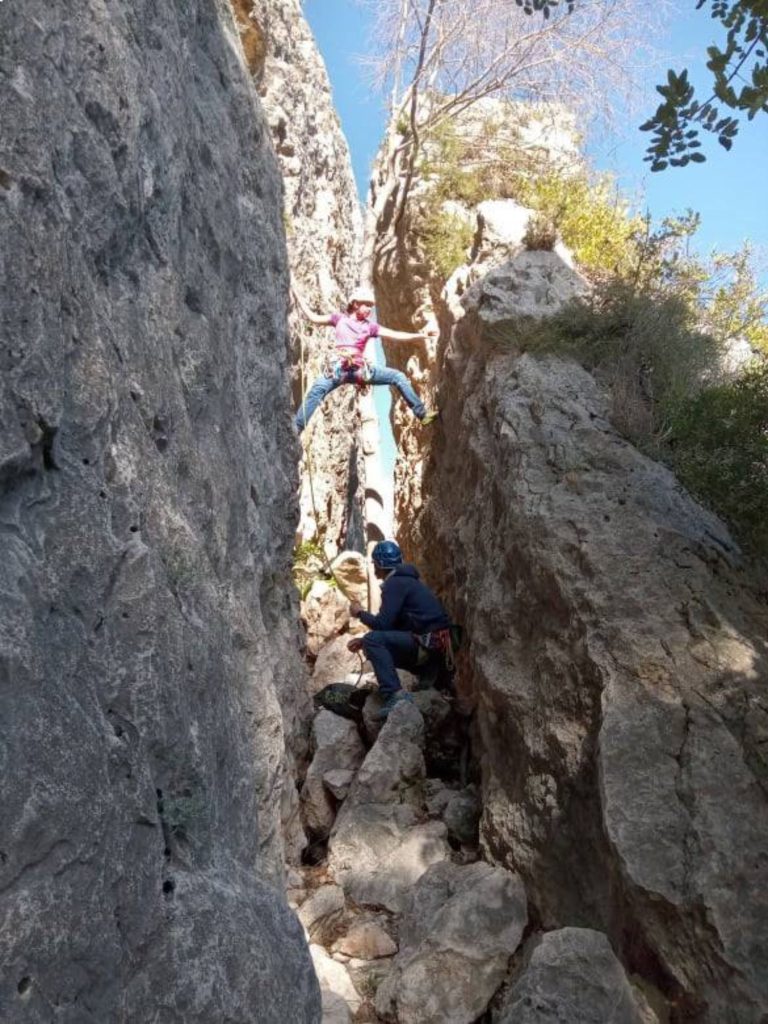
I did at this crag my second 6b on sight (Orgasmo de …). 30 meters of diversified climbing. The beginning in the chimney, then overhang with jugs and then more or less vertical with nothing. And this one was not so easy as that one in Bellus. Here, there was a fight!
Climbing in Cabeçó d’Or
Large climbing area 30 km from the center of Alicante. Approx. 200 routes, the vast majority of which are from 6b upwards and most of them are long – 30-40 m, some even longer. We chose the only sector where you can find easier routes – Cuevas del Canelobre.
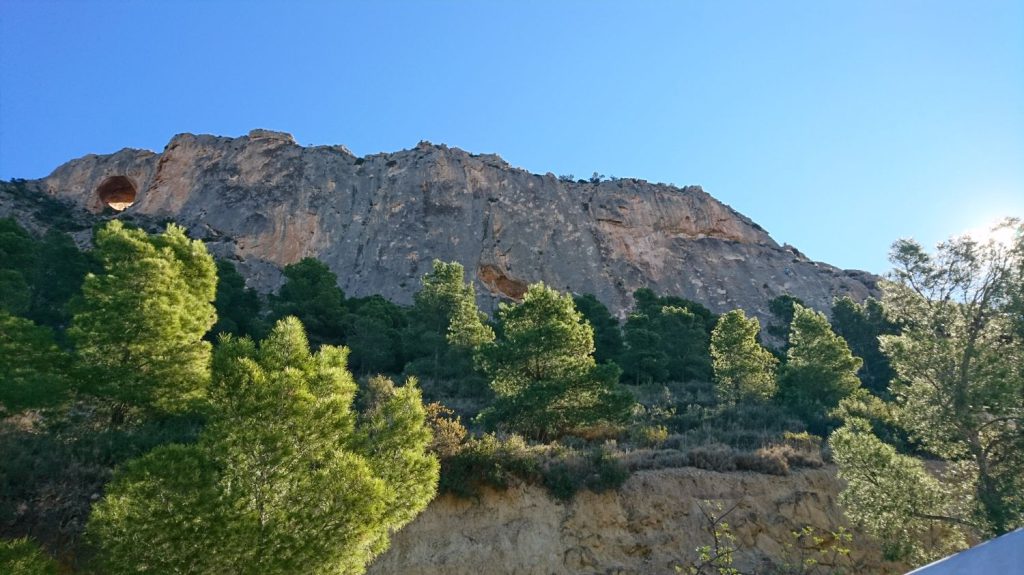
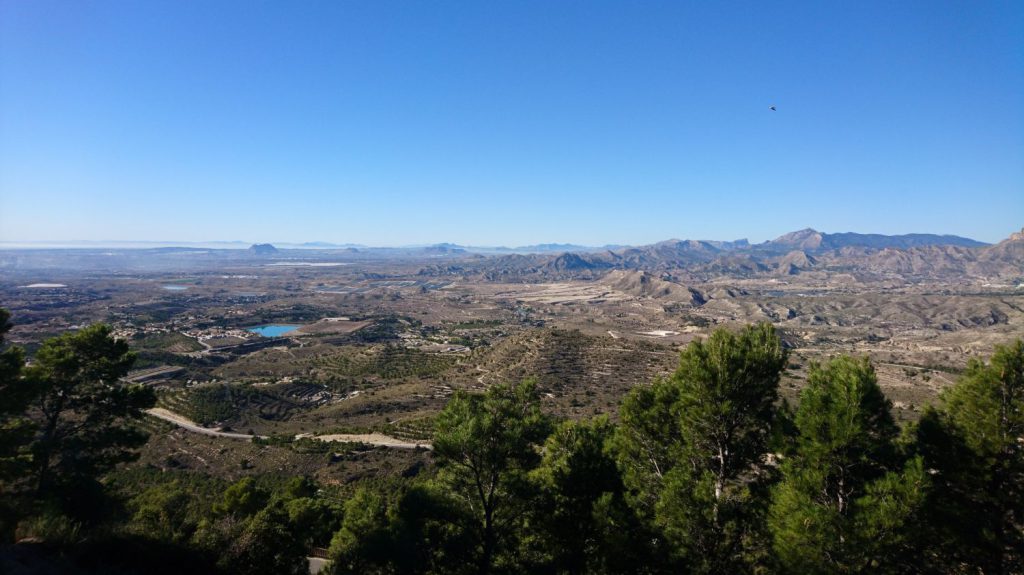
In the sector, there are several 30-meter routes in the 5a – 6b range, all of a similar style, i.e. slabs and verticals with crimps. Nice views from above :)
Right below the rock there is a cave that can be visited by tourists. We didn’t have time for this, but I think it might be a good option for a rainy day.
Climbing in Sella
Even the road to Sella is beautiful. The village is surrounded by mountains up to approx. 1500 m high, which make an amazing impression. And for climbers, several hundred routes at every level. In the Costa Blanca Climbs guidebook there are 440 of them, in 4 areas, but it is noted that these are not all. We only spent half a day in the La Moleta area.
From the parking lot you can see the large roof, which makes an even greater impression from under the rock itself.
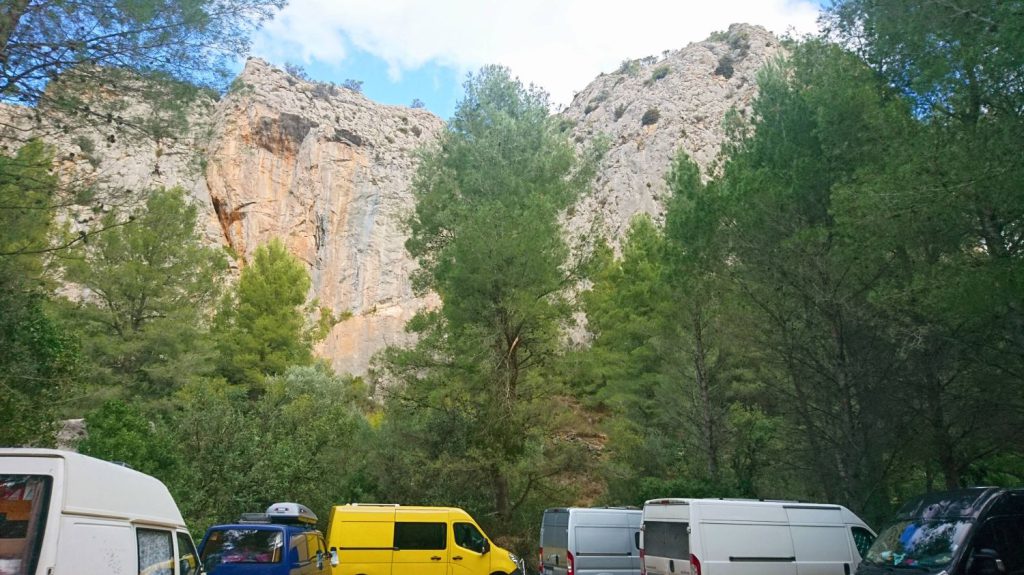
However, we did not try it, despite the fact that on the sides lead 6b, so maybe it could be done ;) We were doing 6c on the left side of the roof and we spent most of the time on the 3-pitches V+, which I wrote about in the article about multi-pitch routes.
Climbing in Barranquet del Ferri
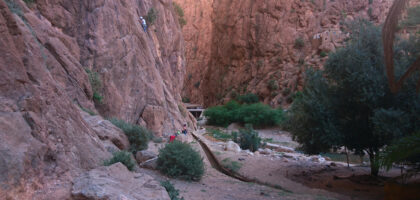
Barranquet del Ferri is a gorge in Alcoy with quite a lot of routes for beginner climbers – over a dozen 4s and 5s. There is a similar number of routes in the 6a–6c range, and a cave for more advanced climbers. Most routes are 12–25 m long and the climbing style reminded me a lot of Frankenjura.
The routes are located on both sides of the gorge, which means that throughout the day some are in the shade while others are in the sun. It also makes it very easy to take nice photos ;)


Climbing in Redován
Redován is located near Orihuela and offers a huge number of long routes on vertical walls from 5s up to 7s.
El Rut
Climbers in the 5a–6c range will find dozens of routes here, many of them around 30 m long, mostly on verticals. There are also several quite long 7th-grade routes. The rock is very sharp and quickly wears down your fingertips.


La Pancha
Another paradise for people looking for long routes in the 5a–6c range. The harder routes are on two-pitch lines – the first pitch is always easier, and as a second pitch there are several routes in the 7a–7c+ range. Like in El Rut, there are lots of verticals on sharp crimps, but also some overhangs.
It was in La Pancha that I climbed my lifetime best – my first 6c on rock: the route Recolecta. Quite easy for the grade, and there’s a 6a sharing the same anchor, so you can easily top-rope it. I highly recommend it as a first 6c. I did it on top rope with one fall and then sent it clean on lead right after.


On the way to the main sector in La Pancha there is a small crag called Lucia. Routes there range from 4 to 6c+. Shorter, but with a different style – instead of technical crimping, more powerful overhangs.


You’ll also find a very unique route there with holds taken straight from an indoor climbing gym XD

Both in El Rut and La Pancha, besides single-pitch sport routes, there are also a few bolted multi-pitch lines. Nearby there are also via ferratas that can be a nice rest-day activity: Via Ferratas on Costa Blanca: Callosa de Segura and Redován.
The areas described here are only a small part of what Costa Blanca has to offer climbers. The region suits both lower- and higher-grade climbers, and the rock is very varied in terms of both height and climbing style.
Photos by me and DJ Transystor.

 Thank you :)


Leave a Reply